What Might Have Been
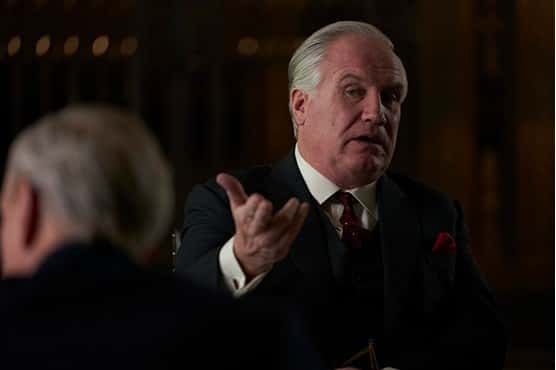
We’ve reached the middle of season 3, and discontentment lingers in the hearts of our characters as well as the people of the UK, beginning with Mr. Cecil King of the Mirror publishing group. The Daily Mirror’s headline “Enough is Enough” speaks volumes of the public sentiment toward Wilson’s failed economic policies as it comes from a newspaper which is typically sympathetic to Labour leaders. King’s personal disenchantment with the state of things takes the form of planning a full-blown coup. You know he’s serious because he quotes Hamlet: “There is special providence in such a fall…the readiness is all.” In this rare moment of action for the Prince of Denmark, he affirms God’s sovereignty over all things and that one must be prepared for whatever may come.
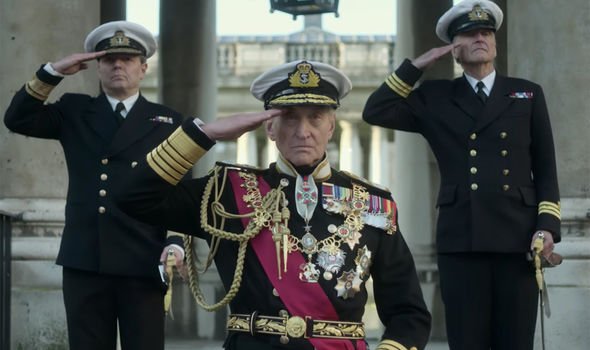
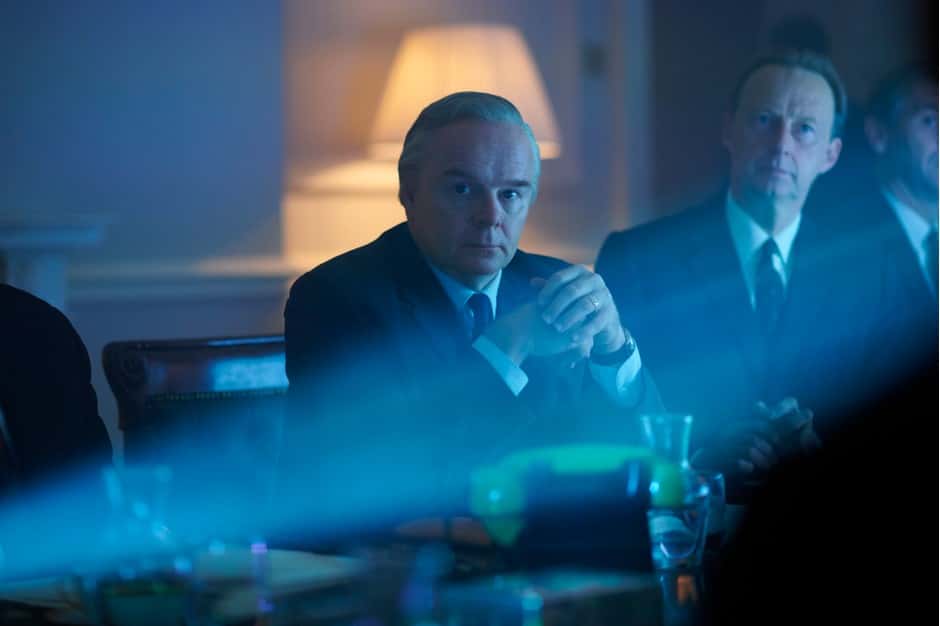
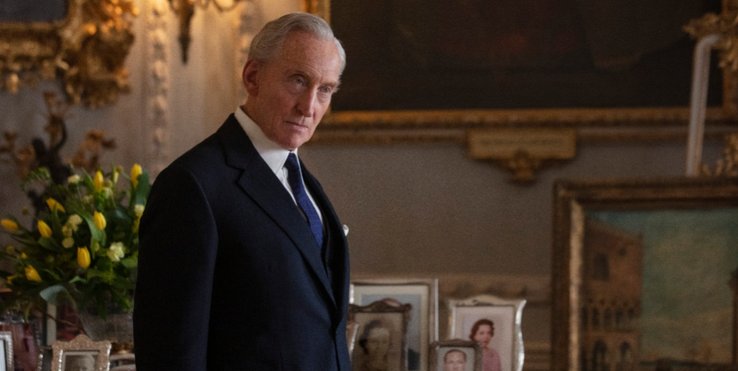
King believes the success of this coup lies in the hands of his proposed interim leader, Lord Louis Mountbatten, played by a perfectly cast Charles Dance. You’ll remember Mountbatten from Seasons 1 and 2 as Philip’s uncle who, together with Philip, unsuccessfully campaigns for the royal House of Windsor to officially be changed to the House of Mountbatten. He’s also a second cousin to Elizabeth and was the orchestrator of Philip and Elizabeth’s original meeting and future marriage.
He was, indeed, a “meddler” as Wilson puts it and safer “inside the tent.” Alas, Wilson’s staff convinces him to cut Mountbatten (a “symbol of a bygone era”) loose in the name of a more balanced budget. For Mountbatten who has been a man of action in service to his country his entire life, this is a deadly blow. His sense of purposelessness leaves him in the perfect frame of mind to be approached by King with ideas for a coup.
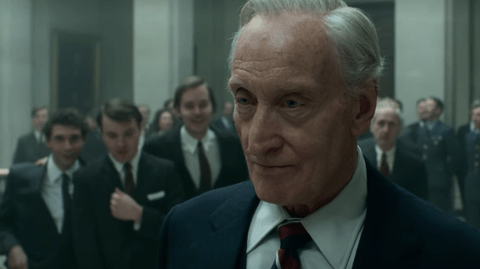
On a side note, there are some absolutely gorgeous shots in this episode. particularly the one which takes a view from above and shows Mountbatten’s men watching from the second floor, singing “Auld Lang Syne” as their boss exits.
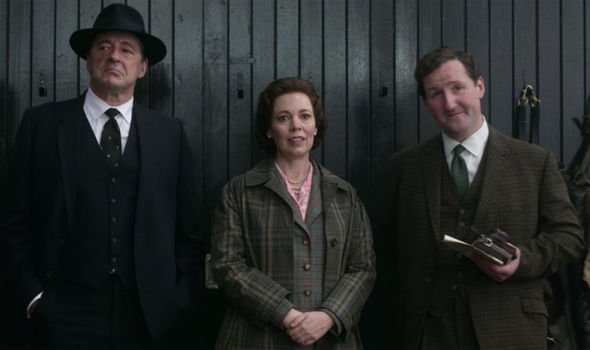
Another character seeking greener pastures is our Queen Elizabeth who is disappointed in the racing performance of her horse. Her longtime friend and horse expert Porchey (first introduced in Season 1), convinces her to take some time to travel to different stables in France and America to see new training methods firsthand. “Convince” is the wrong word, as Elizabeth requires very little prodding. In fact, she can hardly contain her glee at the prospect of escaping the mundane day-to-day of state business, not to mention the unpleasant reality of the people’s rising resentment toward the current economic state.
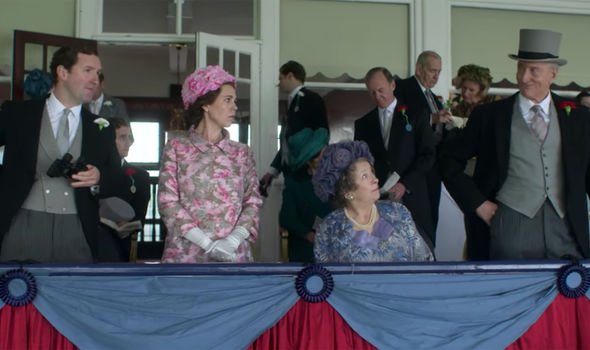
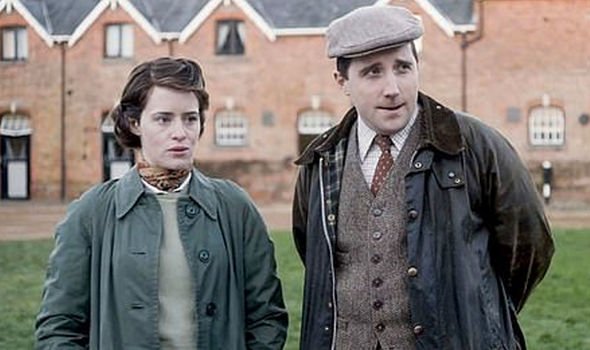
With her travel plans made, the Queen struggles to focus during her audience with Wilson who is announcing his plans to devalue pound. To be quite honest, the subject of economics is not my forte, but judging by the looks on everyone’s faces, this is devastating news. After his televised announcement to the people, Harold Wilson looks as though he, too, would rather be anywhere else.
Upon arriving in France, Elizabeth greets her host in flawless french, telling him there is no need to be so formal, that in the world of horse breeding, “it is you who are king.” She is relishing getting to shirk her role. She and Porchey later travel to Kentucky. Intercut with their “research expedition” are scenes of public unrest back home, further highlighting just what an escape this trip is for our Queen.
Meanwhile, Mountbatten studies coups of the past and when he meets with King and other supporters, he lays out exactly what it would take to mount a successful insurrection. He concludes these statements by stating that a coup in the UK doesn’t stand a chance….unless they have the support of the monarch.
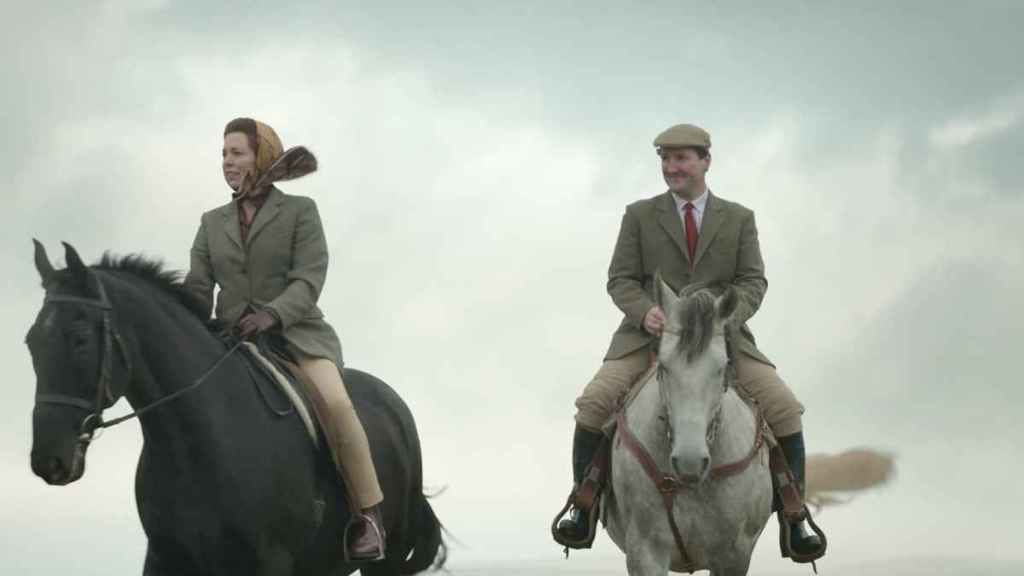
At dinner in Kentucky, Elizabeth shows a rare and candid moment of emotion, stating she has just experienced “one of the most enjoyable days of my life, and at the same time one of the most depressing.” She tells Porchey she wishes she could spend all her time on managing horses- that it is what truly makes her happy.
[It’s] actually what i think I was born to do, until that other thing came along that someone else was born to do and elected not to do.
This wistful daydream of what might have been is not new for Elizabeth or for us as the viewers. We’ve seen in both previous seasons the Queen express her sincere desire to have lived a simpler life. She is often criticized for being “distant” but is there anything more relatable than the occasional reflection on the “un-lived life?”
Her reverie is literally interrupted by “that other thing,” aka her duty as Queen, this time involving a phone call from Wilson filling her in on Mountbatten and King’s machinations.
In her confrontation with Lord Mountbatten, she acknowledges how difficult it is to “do nothing” in the face of trying circumstances, but that doing nothing is exactly what they must do in the Royal Family and wait for the people to take action according to what they decide. Over two decades his junior, Elizabeth has something to teach Mountbatten about being stripped of a certain freedom to act, something she was effectively denied beginning at age 26.
She assures him he still has a duty to the crown in the form of his guidance toward Philip, Elizabeth, and Charles. She also encourages him to visit his sister, Princess Alice, which leads to one of the more poignant scenes of the whole series. In a rather touching moment, the brother and sister (“just two of us left”) face both a literal death and a figurative death, going from “participant to spectator,” after leading full and extraordinary lives.
The episode concludes with a tender scene between Elizabeth and Philip. It’s been so refreshing to see their relationship on more stable ground this season. We see the growth and maturity of Philip in particular in his response to Porchey and Elizabeth’s friendship, a drastically different response than that of Season 1. The Queen may still long for a simple country life, but I think we can be assured that she would still choose to live it with Philip by her side.
Next up…Prince Charles enters the fray at last!
Odds and Ends
Although not a song, Mountbatten’s recitation of Rudyard Kipling’s poem, “Mandalay” could be described as a Soundtrack Moment
Sometimes criticized as having an “imperialist” sentiment, the poem and even the act of recitation certainly fits with Mountbatten’s lament of “The Old Way.”
Memorable Line
I was an English teacher in another lifetime, so I have to give it to the bard:
There’s a special providence in the fall of a sparrow. If it be now, ’tis not to come. If it be not to come, it will be now. If it be not now, yet it will come—the readiness is all. Since no man of aught he leaves knows, what is ’t to leave betimes? Let be.
Hamlet Act 5, scene ii
As a story about a prince who finds himself unable to act in the midst of an unlawful seizing of power, the play makes for an apt reference for episode 5.
 MGC
MGC 
The “Auld Lang Syne” moment was so good! The Queen’s trip made me so sad and happy at the same time; details like that really show the difficulty of the intense privilege she has.
LikeLike