A Role to Play
The new cast for season 3 has certainly breathed some new life into The Crown, but how refreshing it is to delve deeper into a new character! We got a small taste with Princess Anne in episode 4, but with episode 6 we are treated to a full dose of the next generation of royals, and they have utterly captivating storylines.
“Twysog Cymru” (or “Prince of Wales” in Welsh) is the strongest installment in season 3 thus far with an outstanding performance from Josh O’Connor. In the episode, The Crown revisits the well-trod conflict of self vs. duty, but now we explore the repercussions of that battle as seen in the souls’ of the sovereign’s children, particularly Charles, Elizabeth’s first born son and heir to the throne. In season 2, we witnessed his painful and lonesome school experience at his father’s alma mater, Gordunstoun. When we meet him again in episode 6, he is more “settled” in his school life, as his mother says, but he is also a young man in desperate need to be truly seen and heard by those closest to him.
The young adult Charles makes his season debut in costume as Richard II, rehearsing his lines as he prepares to take the stage. The Crown has never been known for its subtlety! Elizabeth later describes his love for acting as a way to “express himself,” something we will learn he has very little chance to do in real life.

His relative contentment at Cambridge is soon disturbed when Elizabeth, persuaded by Harold Wilson, announces that Charles will travel to Wales ahead of his investiture to learn the language and hopefully make his speech in Welsh. As Charles sits alone, facing the members of his family, the Queen effectively tells him he is going to Wales (“no buts!”).
The lack of communication among the family members weighs heavily on Charles. Later, that failure to communicate will have catastrophic effects on his personal life as well as the fate of the crown itself. Philip says nothing to his son, but he does give him a strong- and perhaps in his mind, reassuring- grip on the shoulder.
Even in conversation with an ally, Anne, Charles is set apart. He wonders aloud why his mother is so cold toward him, but Anne, channeling her father, matter-of-factly tells Charles he needs to get on with it. She gives him an affectionate farewell kiss on the cheek but true to form she follows it with a good-natured punch in the stomach.
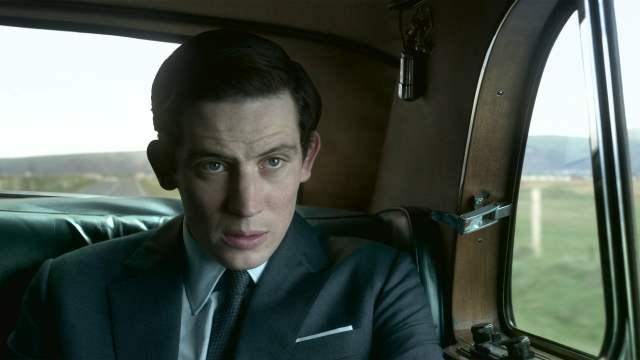
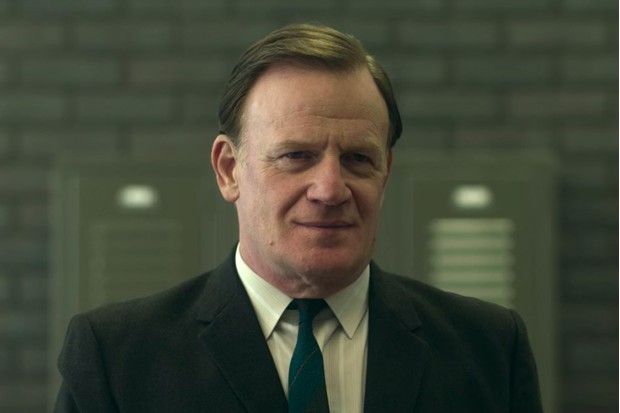
As Charles crosses the border into Aberystwyth, Wales, we see images of run-down, abandoned places while a voiceover speaks in Welsh of the need for“home rule.” We learn this voice belongs to Dr. Edward Millward, Vice President of Plaid Cymru (political party advocating for Welsh independence). When Dr. Millward is told he will be teaching the Prince of Wales the Welsh language, his objection falls on deaf ears, strangely mirroring the previous scene between Charles and his family.
During this three month excursion, Charles discovers he and the island have much in common. Wilson earlier describes the region as feeling “aggrieved, under-looked, and undervalued.” Millward expresses Wales’s desire to have self-determination rather than be governed by “those who don’t even know who you are.” As Charles’s eyes fix on a photograph of a Welsh village, drowned for the purpose of providing water to an English city, he grimly says “I know how that feels.”

We also see the loneliness and isolation Charles experiences- “I’m incredibly used to it!” he says- consequences not only of his unique position in life but also who he is personally. While the real life Charles did have a few friends at Cambridge, it’s true that he connected more with teachers and mentor figures, than he did young people his own age. It’s also true that he always looked the more traditional part, even in the revolutionary 60s and 70s. I read once that when told his impeccable dressing made him appear square, Charles replied, “If people think me square then I am happy to be square.” He certainly didn’t mind his perfectly tailored suits and combed hair, even if it did set him apart from his peers.
Dr. Millward picks up on Charles’ s lack of friends and invites him over for dinner, much to his pregnant wife’s shock and dismay. In a heartbreaking moment, Charles watches the Millwards put their young son to bed with great affection, and it is as though he’s seeing that happen for the first time. In real life, there are varying accounts of Elizabeth and Philip as parents. Even Charles’s accounts are conflicting, but at the very least, one can see where Elizabeth’s duty to the Crown demanded more time and attention than she was able to give her children.
It’s interesting to consider how this has impacted her children individually. In the show, certainly, we see that Anne seems to have coped with it better than Charles has. But is that because of a difference in their natures or or is it because Charles has had more pressure or even different treatment as a son and as an heir? #1 and #2.
After Dr. Millward and his wife, both staunch Republican Nationalists, have spent some time with Charles, they each accuse the other of “liking him” and “feeling sorry for him” in turn. It’s a moment that takes them both by surprise, and frankly, it could be a reflection of the viewer’s heart toward the Prince of Wales as well.
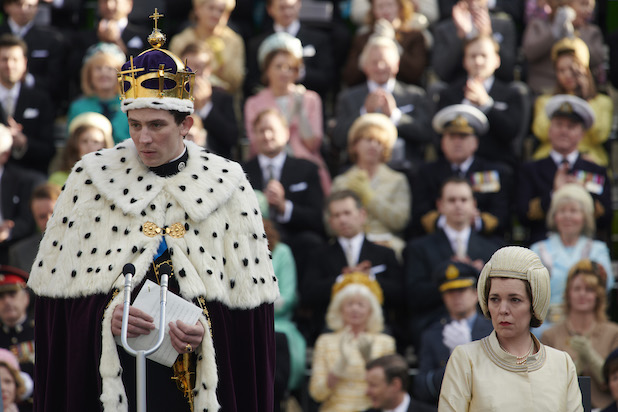
At his investiture, Charles delivers his well-rehearsed lines with a calm demeanor and steady voice. In addition to the words written by the palace, Charles adds in a few of his own, stating that Wales is right to desire “her own identity…her own voice.”
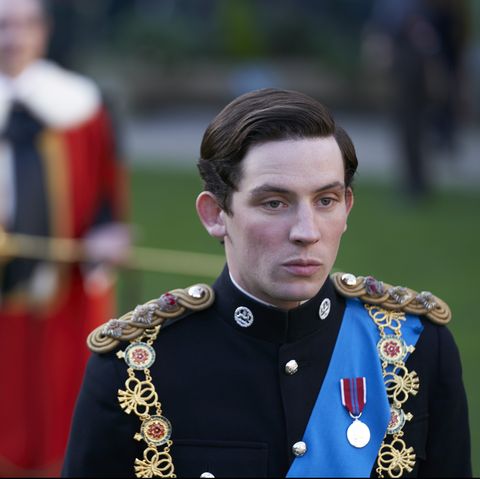
He has won over the people of Wales; he has made a friend in the reluctant Dr. Millward; and he has probably earned your sympathy as the viewer. But there is one person whose approval he still seeks. Back at Buckingham Palace, at the close of a long and arduous tour of Wales following his investiture, Charles comes home to find nobody waiting to greet him.
When he asks a member of the staff to ask if his mother will see him, one can’t help but be reminded of Antony Armstrong- Jones’s strained relationship with his mother as depicted in season 2. The Queen concedes to see Charles “if it can’t wait.” And that’s not even close to as cold as it’s going to get.
What follows is a dynamic scene between mother and son. We always knew what an incredible actress Olivia Colman is but how terrific is Josh O’Connor? Their exchange not only paints a picture of their relationship, it also encapsulates the central conflict of the whole series, that of the struggle between doing one’s duty and staying true to oneself.
We know we have seen Elizabeth as a caring mother; in season 2 she begged Philip to bring Charles home from Gordunstoun so he could attend Eton. But here, she cannot bring herself to tell her son “well done” for a favorably received royal tour.
Her grievance lies in Charles putting too much of himself in his investiture speech by clearly drawing comparison between his lot and that of Wales. Charles affirms that he has a voice; Elizabeth counters that they are not allowed to have a voice- that they as the royal family must suppress who they are.
She repeats Queen Mary’s speech from Season 1 word-for-word (that they must not show partiality in any way) and Charles’s response is also verbatim to Elizabeth’s at the time (that they may as well not “think, or feel, or exist”). Conversely, Charles tells his mother that doing this is easier for her than it is for him, because [unlike her] he has a “beating heart.”
It’s true that Elizabeth by nature does not seem to possess as many personal opinions and beliefs regarding political or social issues as someone like Charles, but it must sting to not only be denied having any opinions but then also be chided for it by one’s children. A glimmer of sympathy may be spared Elizabeth for this, although it’s hard to give her in this scene.
The clincher of the scene and the whole episode comes when Charles begs one more time to be heard: “Mummy, I have a voice.” His mother’s reply? “No one wants to hear it.”
This response is harsh, but one has to admit its validity: the public does not wish to hear the personal thoughts and opinions of the crown. However, when Charles questions whether she means the public or his own family, and she replies, “no one,” it is truly unbelievable, and we keenly feel Charles’s anguish.
*UPDATE* I was listening to the official podcast for the show, and I heard director Christian Schwochow discussing that last shot of Elizabeth at her vanity after Charles has left the room. He pointed out something I hadn’t noticed before: that conflict within her of her duty vs. real maternal feelings towards Charles- that perhaps she feels as wretched in that moment as her son for saying what had to be said, for choosing duty at great personal cost.
The episode concludes with Charles taking the stage. He did, in fact, love to act and performed in many plays, including Henry V; however I did not read that he played Richard II, although one can easily see why this speech was chosen for the show:
…throw away respect,
Richard II Act III, scene ii
Tradition, form and ceremonious duty,
For you have but mistook me all this while:
I live with bread like you, feel want,
Taste grief, need friends: subjected thus,
How can you say to me, I am a king?
Quite a part to play.
Charles (at this moment in the series) is a young man who has waited all his life to ascend to the role to which he was born, for his life to take on full meaning. And yet, for fifty + years he will continue to wait, as longest serving heir to the longest serving UK monarch.
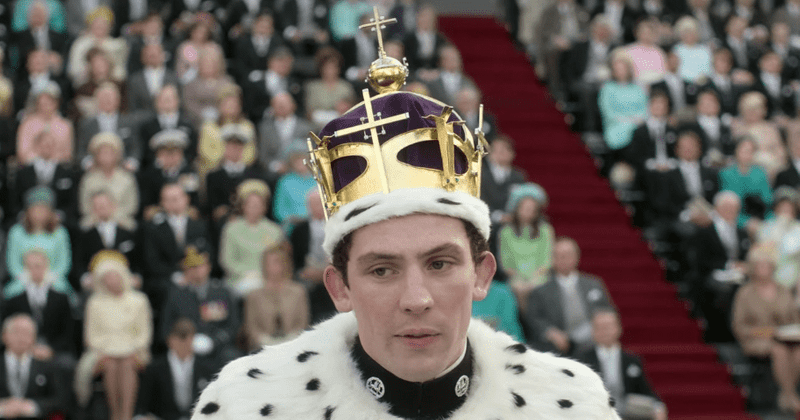
During his investiture ceremony, Chares is outfitted in a robe and crown not dissimilar to his Richard II costume. One recalls the queen mother’s description of the royal family as marionettes, putting on a show. Earlier the Queen tells Harold Wilson that gestures are all they have…that smoke and mirrors are not there to keep the monarchy apart but rather, alive. But what happens when that smoke threatens to choke out the life of one of the royal family’s major players?
Odds and Ends
Memorable Lines
Nobody likes a misery guts.
Anne with the encouraging word! In real life, Charles really did have the nickname “Eeyore” from time to time.
If we pretend we’re something long enough we might just become it.
Dr. Edward Millward
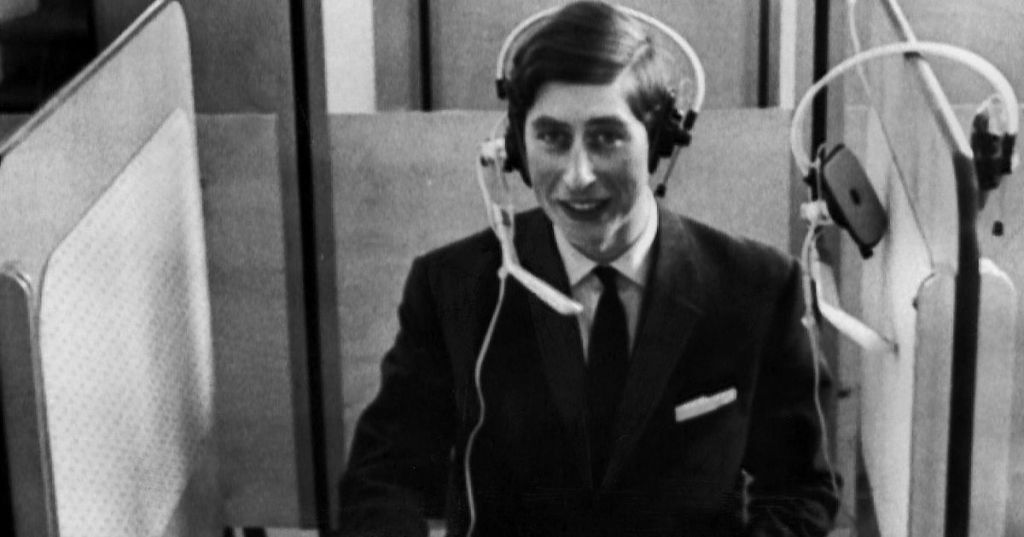
The real Prince Charles learning Welsh:
 MGC
MGC 